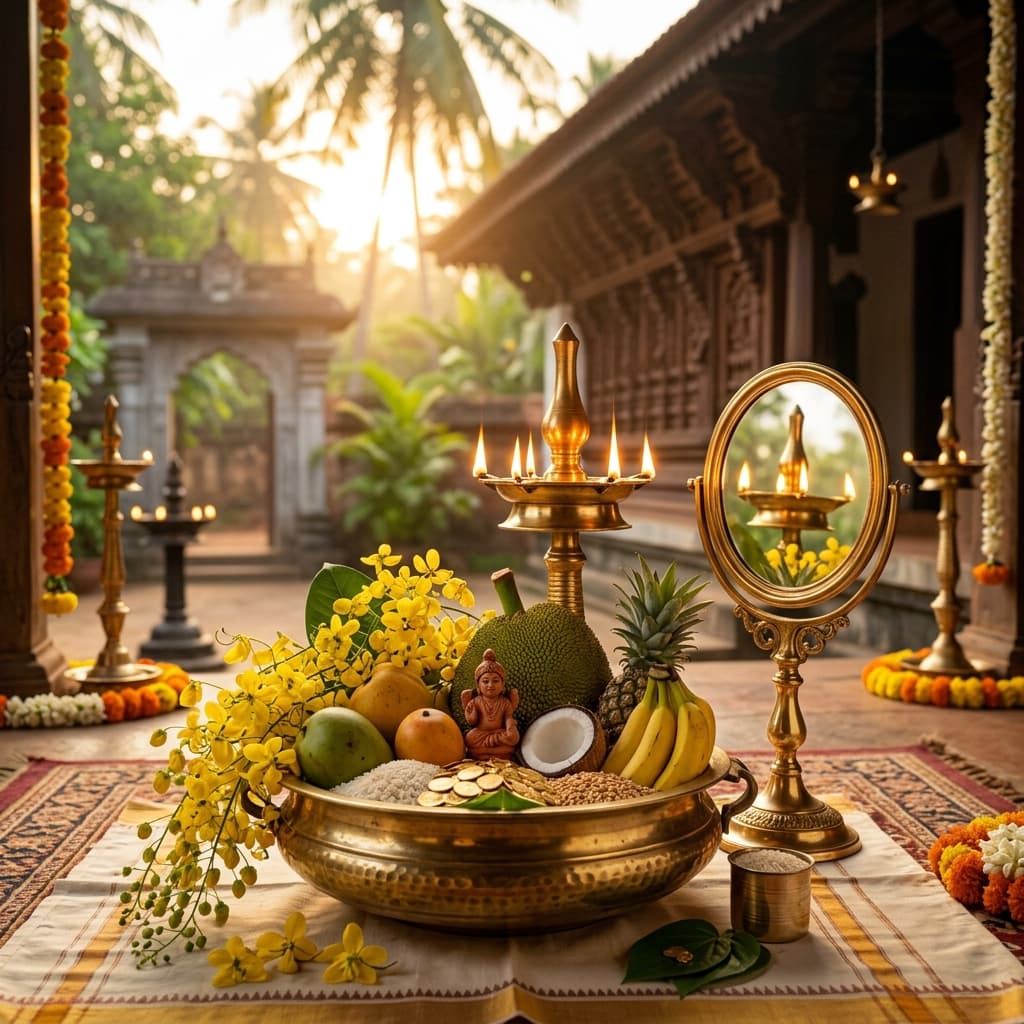
Thiruvananthapuram: Vishu 2026, one of the most cherished festivals in Kerala, will be celebrated on Wednesday, April 15, 2026. The festival marks the astrological New Year in the Malayalam calendar and coincides with Mesha Sankranti — the moment the Sun transitions into Aries (Mesha Rashi).
The astronomical transit of the Sun into Aries occurs on April 14, but since Vishu is observed on the day of the first sunrise following this transition, the celebrations fall on April 15 this year.
Mesha Sankranti Timing and Astrological Significance
Mesha Sankranti marks the beginning of the sidereal solar year in Vedic astrology. The Sun's entry into Aries — the first sign of the zodiac — symbolises renewal, courage, and fresh beginnings. In Kerala's astrological tradition, the Vishu Phalam (yearly prediction) is calculated based on the exact moment of this transition.
This year's Mesha Sankranti is particularly noteworthy as it occurs during a period when multiple planets are concentrated in Aries (the Aries Stellium of 2026), amplifying the energy of new beginnings and bold action. Saturn has also just emerged from combustion in Pisces on April 13, adding a karmic reset to the New Year energy.
Astrologers note that a Vishu coinciding with such powerful planetary alignments is rare and signals a year of significant transformation for all twelve Rasi signs.
Vishukkani: The Sacred First Sight
The centrepiece of Vishu celebrations is the Vishukkani (literally, 'that which is first seen'). Families across Kerala prepare an elaborate arrangement of auspicious items the night before, typically placed in front of an image or idol of Lord Vishnu or Krishna.
The traditional Vishukkani includes:
- Kanikkonna flowers (Golden Shower / Cassia Fistula) — the flower of Vishu
- A brass Uruli (traditional vessel) filled with rice, fruits, and vegetables
- A Valkannadi (traditional mirror) reflecting the arrangement
- A lit Nilavilakku (brass oil lamp)
- Gold coins, fresh coconut, betel leaves, and the Kani Vellari (golden cucumber)
- Holy texts such as the Ramayanam
The eldest member of the family wakes before dawn and views the Vishukkani first, then guides other family members — usually with their eyes closed — to view the arrangement. The belief is that seeing these auspicious items as the very first sight of the New Year sets the tone for prosperity throughout the year.